Outdoor routes
Guide guests between real-world locations with maps, directions, and location-based stops.
Digital tours & audio guides
Create self-guided routes, indoor audio guides, and experiences along designated routes. Combine maps, audio, stories, and interaction in one guide that accompanies visitors.
Fictional example · explore without registration or purchase
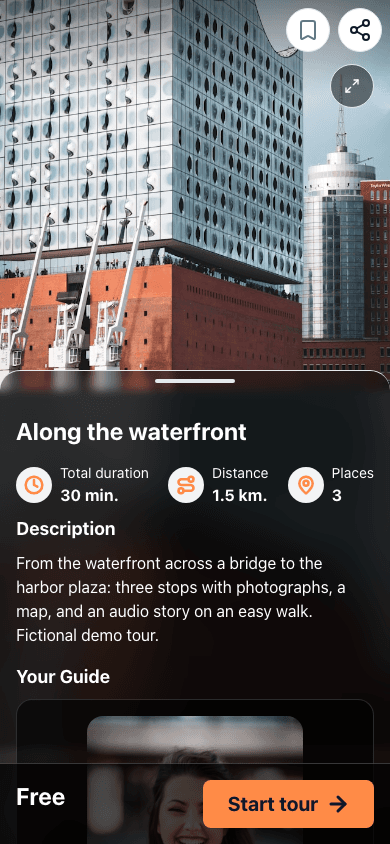
For museums, attractions, cities, and tour operators. Choose the format that fits the place, then connect every stop into a coherent visitor journey.
01 / Create
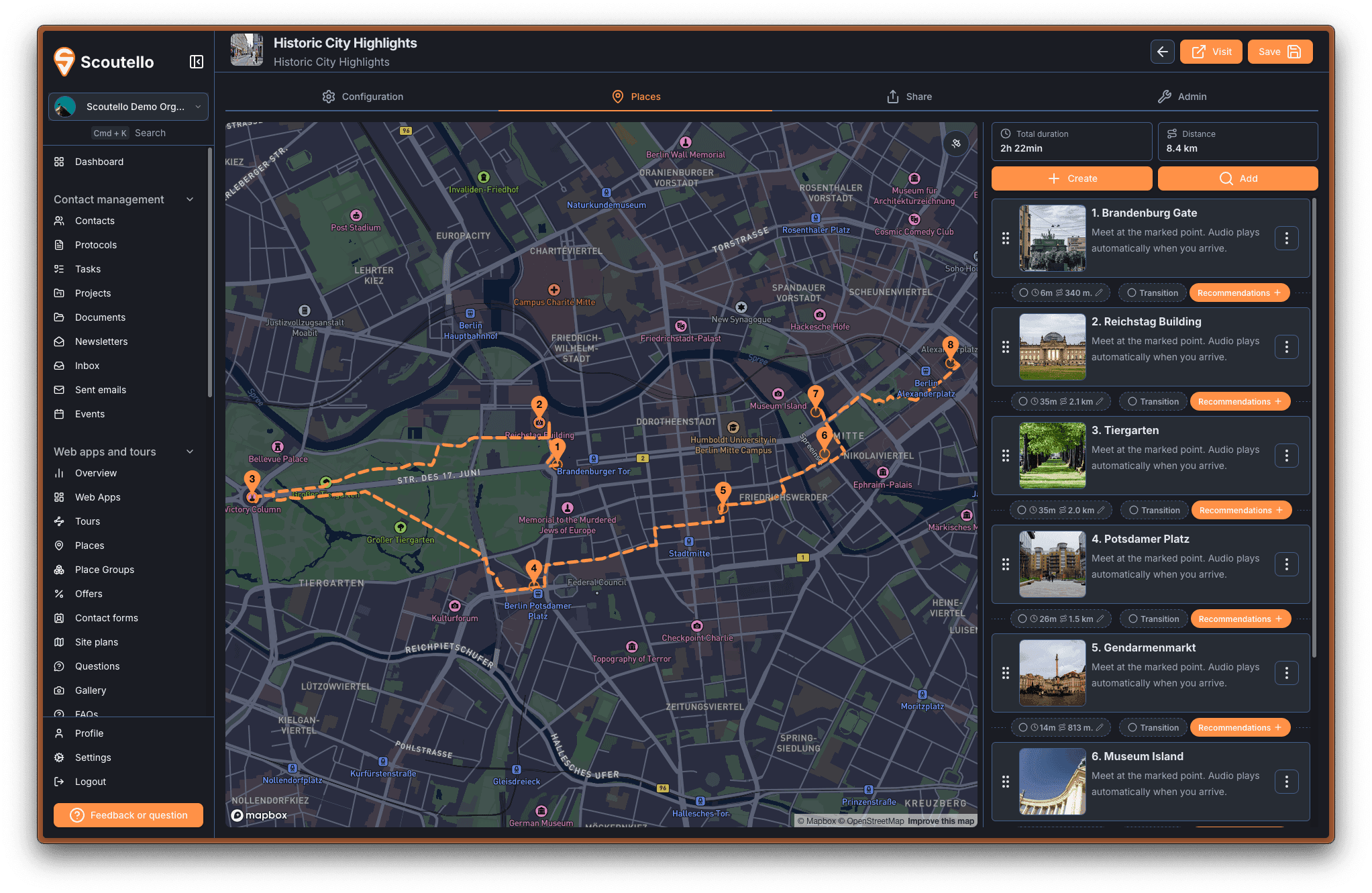
Arrange stops, maintain stories, and define how visitors experience the tour. Formats for outdoor and indoor settings, as well as fixed routes, support different environments.
02 / Explore
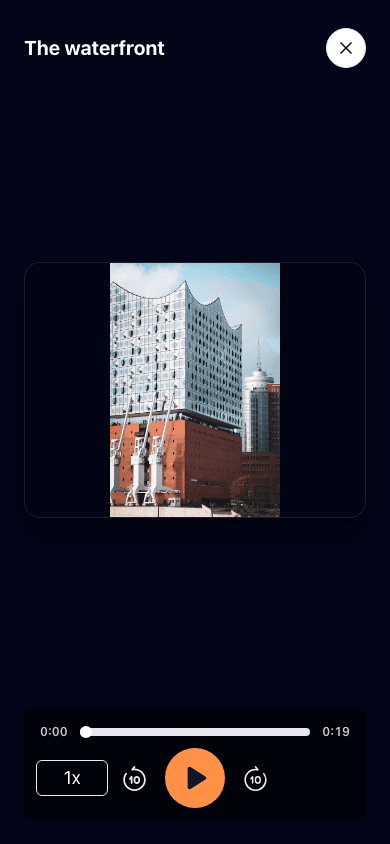
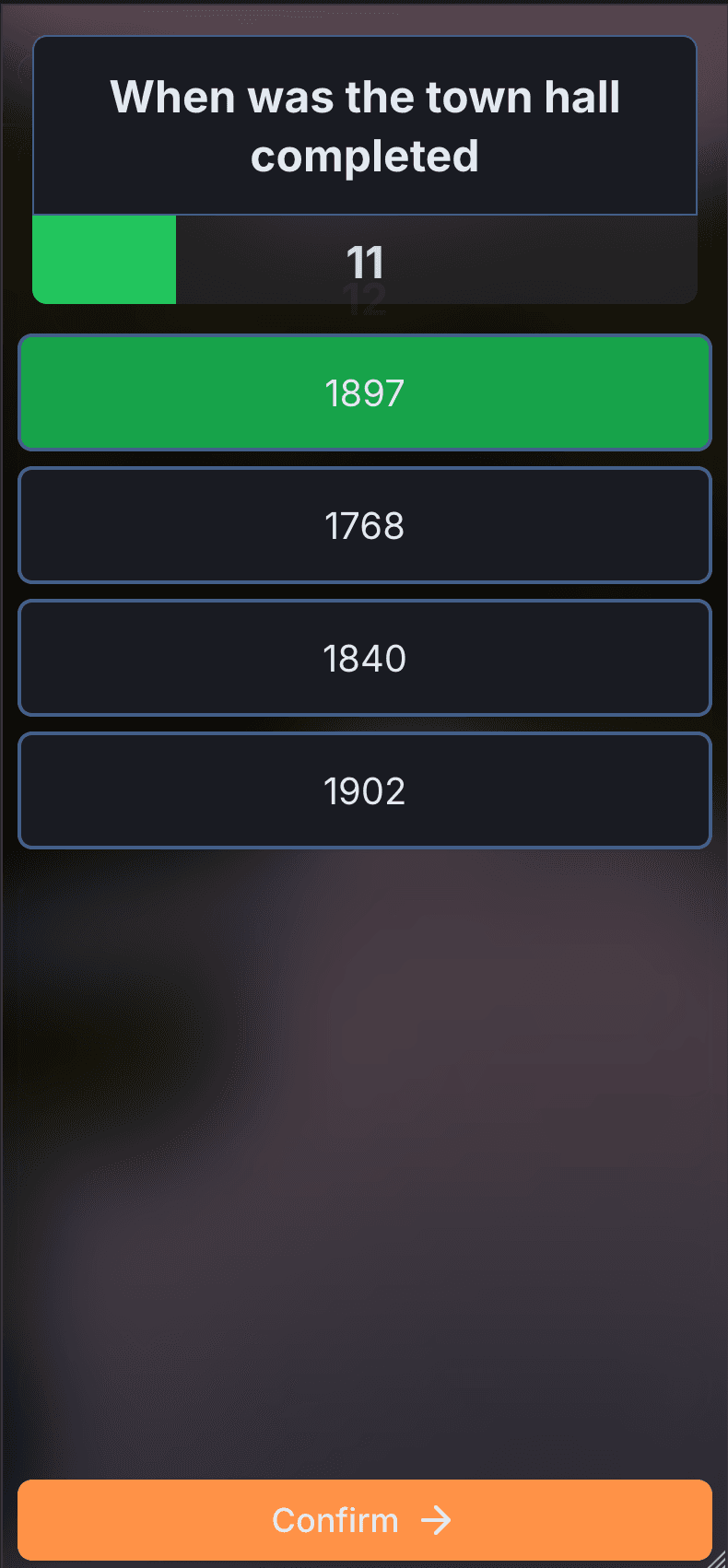
Let visitors listen, look closer, and participate. Each stop can connect the story with audio, images, additional information, and a quiz.
03 / Share
Publish a tour that visitors can open from a link or QR code. Offer free access or a paid experience, and keep the content current from the workspace.
Built around the use case
Guide guests between real-world locations with maps, directions, and location-based stops.
Build a sequence through exhibitions and attractions without relying on outdoor navigation.
Use a defined route for formats such as sightseeing trips and moving experiences.
Enable virtual starts for eligible free tours so visitors can explore remotely as well as on site.
Review tour activity and visitor feedback to understand how an experience is being used.
Bring participants together in a shared tour and coordinate progress with readiness checks at the stops.
Connecting guests and teams at










Before getting started
Outdoor routes fit experiences between places, indoor tours fit exhibitions and attractions, and fixed routes fit a defined moving itinerary. A demo can compare the formats using the intended route.
Yes. Tours can be free or paid. Payment setup, applicable processing fees, and the intended sales flow should be reviewed before publishing a paid experience.
Virtual access can be enabled for eligible free tours. It is a separate setting from on-site navigation and is not automatically available for every tour.
Start with the route or stop list, descriptions, images, and any existing audio. Content can be extended with translated text, narration, quizzes, and additional information as the tour develops.
Yes. The example on this page contains fictional content. Information, maps, and audio can be explored without registration or purchase. A demo then shows how the team manages the content in the background.
BUILT AROUND THE JOB
Start selling paid guides for free, or choose modules, adjust usage and see the complete price.
CREATE & SELL
Create an account without choosing a module and sell paid tours or guides with no recurring subscription. The Guides module covers freely accessible guides with activations.
Includes: 20 published paid Guides and unlimited trial use.
Start for freestandard platform fee per sale; individual terms may differ
Payment processing is additional. Editorial services, distribution support and AI generation are not automatically included. Purchased guide access does not use a Guides subscription allowance.
The ongoing subscription can be cancelled monthly. Higher invitation capacity is available after payment; reductions take effect at the next renewal. Invitations already issued remain valid for later events.
Annual payment covers twelve months and saves 10% after the bundle discount. Monthly allowances do not accumulate across the year. Event emails earned through invitations remain available for that event.
Invitations count in the month they are first issued, even when the event takes place later. Each person counts once per event. Reducing the plan later preserves those invitations and their event-email allowance.
500 stored contacts are included, or 1,000 with the CRM module. Each additional 1,000 contacts costs €5 per month. CRM adds relationships, interaction history, opportunities and follow-up. The allowance applies once per organization.
When the purchased limit is reached, no further invitations can be issued until capacity is increased. Invitations already issued and existing event access remain available.
Known people are deduplicated by account or access token. Anonymous visits use a browser identifier; different devices may count separately. Staff previews, bots and duplicate imports are excluded.